Writers don’t typically one day think, “I think I may write something.” They usually have been writing all their lives, and once they discover a subject of meaning to them, they are compelled to write about it. Every writer is different. It would be rather boring if it were not so. Every man his own style. But each man’s love, whether he means for it to or not, is revealed in his writing.
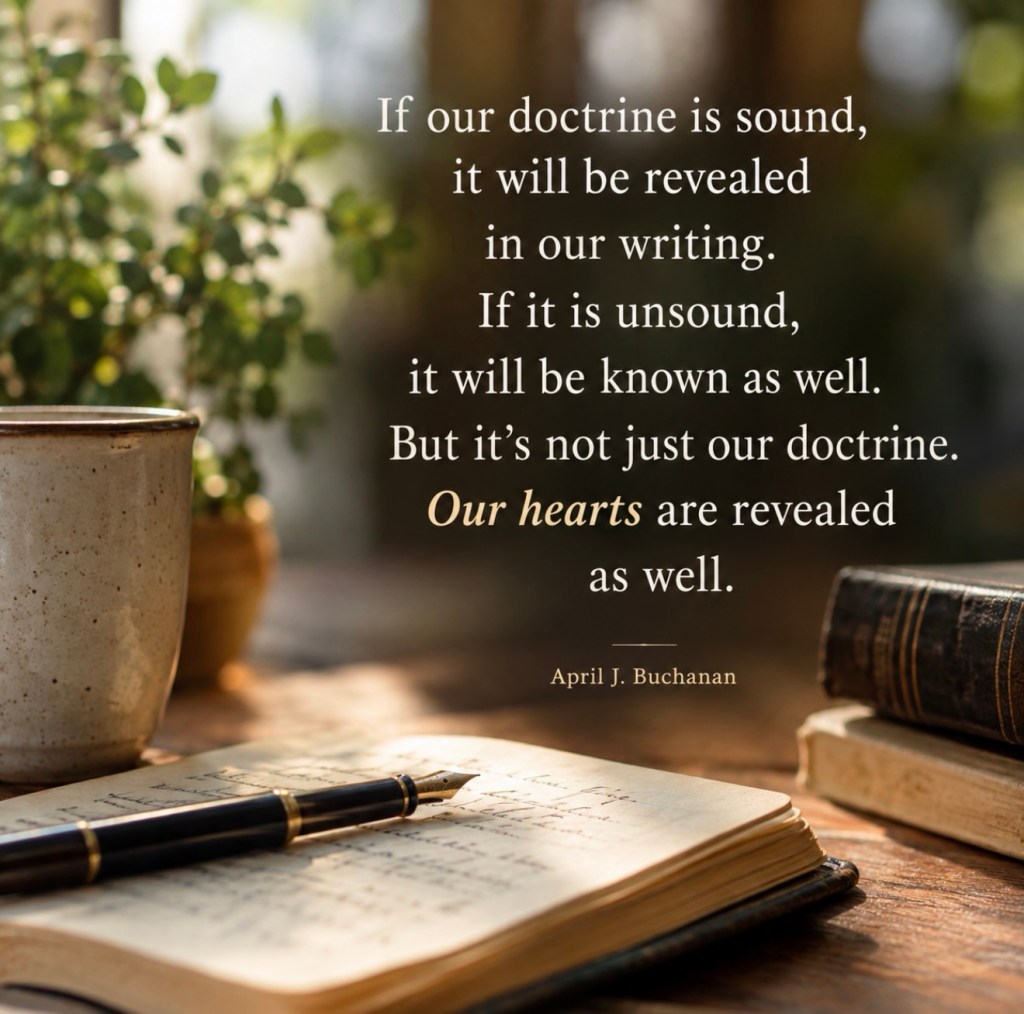
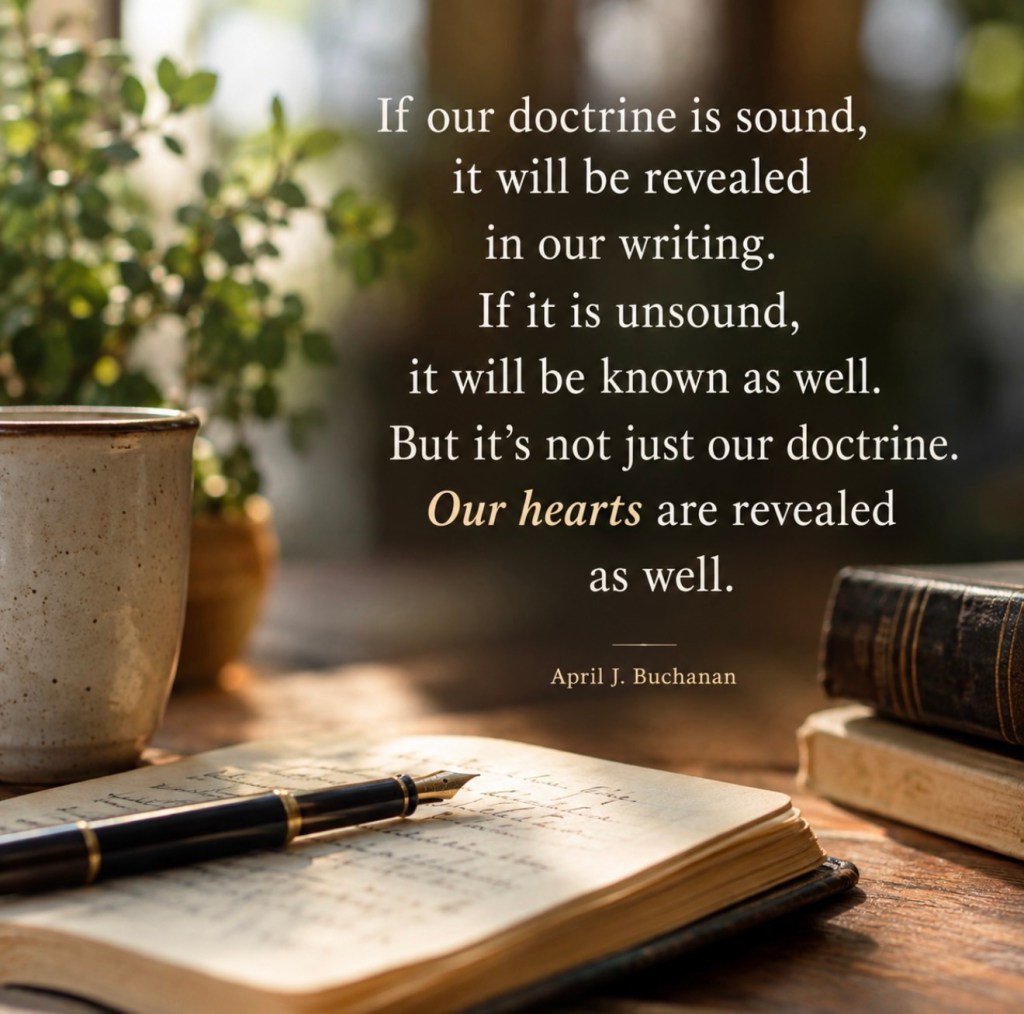
It’s well been said that a writer doesn’t know what they are thinking until they write. That can be good and bad. Whatever he has stored up in his heart comes out in his writing. If a writing is good, it has well been said, it cannot be separated from the one who wrote it. If our doctrine is sound, it will be revealed in our writing. If it is unsound, it will be known as well. But it’s not just our doctrine. Our hearts are revealed as well.
Ought every man who thinks he has something to say do so? No! While that ought to examine us all, and not just once but continually, let it not discourage the one who ought to write. The most prideful will assume the latter is about him and not examine himself. They are many. Few are those who are far more careful before taking up their pen, even if they have much knowledge about God. Let every man examine his doctrine and his own heart as well.
There are no shortcuts. There are useful tools and helpful techniques, but there are no shortcuts. If we are to develop a theology of writing, then it is as any other ministry where words are conveyed. It must first be wrought in us before it is conveyed to another.
I come from a theological background where anyone is encouraged to write and to share their testimony, as it is considered so uniquely anointed that it carries a power of its own to rescue those who can only be reached through that testimony. What is seriously lacking or non-existent in those testimonies and in the writings of those who take up their pen is a knowledge of who God is, who Christ is, what He has done, good hermeneutics, and it shows in their handling of Scripture and sound doctrine. The main problem is not with their misuse of commas or other poor grammatical errors. If that was all, then let them write to the glory of God and grow in those areas. But that’s not the problem.
They have learned that their testimony is needed and that souls are depending on it, and if they don’t write it, then those who need it may perish without it. That’s not trust in the sovereignty of God in salvation or the Gospel. It’s also making more of one’s testimony than is theologically sound. It doesn’t matter if they can write or if they have sound theology. They are released and encouraged to write because they have a “powerful testimony.”
The reality is that these souls are not going to stop writing. And it may even get worse. If a man seeks sound theology in a “Christian bookstore” or in the Christian section of the religion aisle in a bookstore, he is almost guaranteed that he will pick up a book that will profit him nothing and lead him into grievous error or heresy.
Not every man should write. But if a man has sound doctrine, that alone is not enough that he should write. It is vitally important to his writing, but it alone is not enough.
If our hearts are not being transformed by sound doctrine and we are not growing and maturing, then our writing, no matter how theologically precise, will suffer. If we write because it’s what we do but we find no pleasure in the One of whom we write about and no genuine love for the saints or the lost, that will be evident no matter how we seek to hide it. You cannot separate sound doctrine and genuine love.
Do we love the God of whom we write? Do we love the saints? Do we love those of whom we warn of their falsehood? Do we love the lost? Do we love the truth? Do we love, or have our hearts been hardened while our heads are still filled with much knowledge about God? We can lie to ourselves, but if we write, it will always ultimately reveal not only the truth we intend to convey but the truth of our own hearts.
Below are some notes from a video by Michael Reeves on A Theology of Writing. I recommend that anyone who loves to write and loves God listen to it.
And dear one, don’t compare your writing to others in the sense that you find yourself weaker than another. If you learn from another who is more mature, more disciplined, or more faithful, then let that help you in your writing. But don’t throw off writing because you have a different style or your writing is different. Different is not bad, so long as that is not an excuse for laziness in study, in growing and maturing, or in writing what departs from all of church history because you feel you have something new or “different” to say.
Someone wisely said, “There’s nothing new in theology except that which is false.”
You don’t have to have something new to say. Your testimony is not so uniquely anointed and powerful that souls will perish without it. If God has given you a desire to write, then be careful how you use that. It’s been said that a pastor who has a desire to preach and not to study has a desire to perform. Likewise, a person who desires to write but does not desire to study, grow, and mature in the faith does not have a desire to faithfully write, but a desire to be heard. Not every man should preach. Not every person should write.
Excerpts from A Theology of Writing by Michael Reeves:
“And so I suggest if we are to be godly sub writers writing in God’s image, our writing must involve, One, knowing God as the Son knows God. Two, making God and his ways known as the Son makes him known. And three, aiming as the Spirit does to see hearts affected by the power of the gospel, the sword of the Spirit, so that our readers love God. All of this with the ultimate goal that God is truly glorified, meaning that believers will increasingly be filled with all the fullness of God.”
“So Christian writing involves one knowing God, two making him and his ways known, three affecting hearts and all for the glory of God. So with those three points, it all means Christian writing is built on a non-negotiable foundation, knowing God.”
“The Son can make the Father known because he knows him. And we can only make God and his ways known to the extent that we know him. That is why friends, your growth as a Christian is the most important part of your growth as a writer.”
“You can hone your skills to a razor’s edge, but you are not likely to bring your readers to know and delight in God more than you do. You can know the truth. God ought to be enjoyed and you understand that truth, but you are not likely to bring people to enjoy God more than you actually do.”
“If you are to communicate the beauty of God or the foulness of sin, you must appreciate those things deeply yourself.”
“And so communication skill is good and we will come to that. But all the communication talent in the world can only convey as much knowledge or delight as you have.”
“A theologically thin Christian, however talented, will be a theologically thin writer.”
“And therefore, before anything else, Christian writers must constantly seek to grow in their knowledge of God and of his ways. It means we must be soaked in Scripture, full of God’s truth. It means we need to stretch our minds theologically, not be content with where we are at.”
“And you know that constant mental stretching does something to you. It does something not just to the weight of your content. It does something to your very tone. You know, we all know the slightly patronizing voice some pastors and theologians can have, right? And it’s as if they seem to have arrived at their level of maturity years ago, and now they’re spoon-feeding us with stuff that’s gone stale for them. It doesn’t really seem to excite them, and so it doesn’t excite us. But those who are still growing have an air of wonder and excitement about them, because they’re pushing, pushing to see fresh insights into His glory.”
Reeves also speaks about the weaknesses God uses in the writer:
“The very point where you are weak is probably where God will use you most. And where you can be most helpful to others.”
And finally:
“And therefore, friends, press in to behold the glory of the Lord. Because by so doing, you will not only add a weight of glory to your content, you will be transformed from one degree of glory to another. The more you glory in him as the Son glories in the Father, the more you and your writing will carry the aroma of Christ. You’re going to give away your heart. So shape your hearts by the glory of Christ.”


Leave a comment