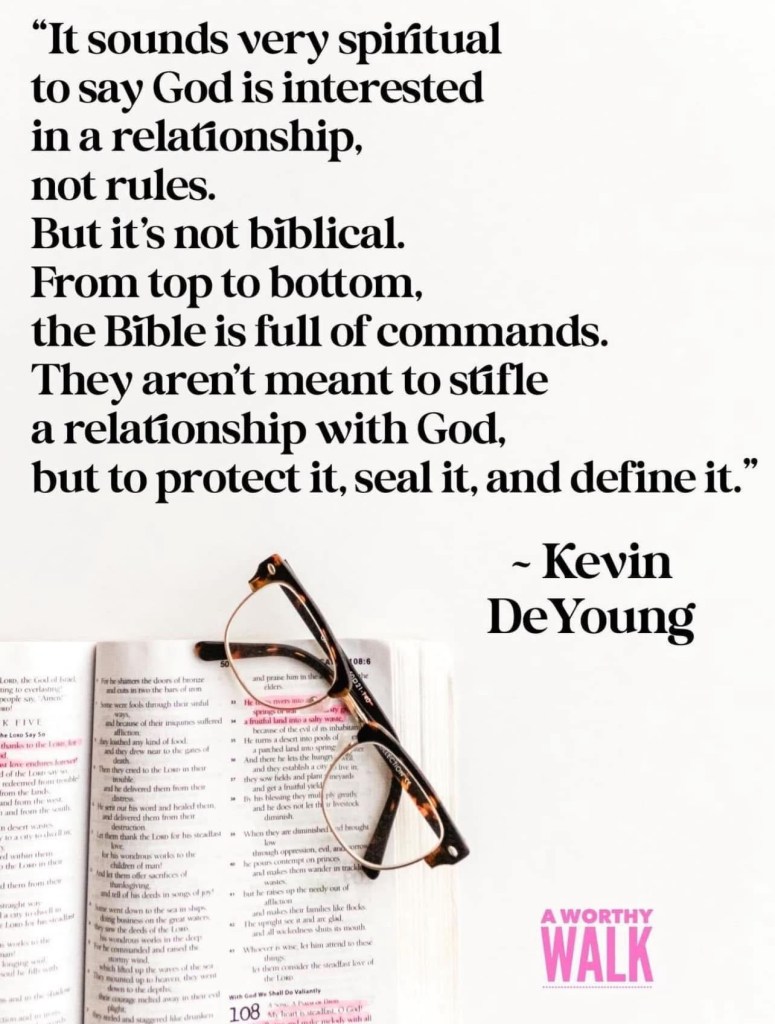
Have you ever heard, “Jesus does not want religion; He wants relationship?” How did we come to that conclusion? Did we assume it was true? Why? Is it true that Jesus does not like religion?
“True religion is not a matter of form but of power; it is the heart aligned with God, not merely the practice of outward rites.” ~ John Owen
Scripture Does Not Support This Dichotomy
Scripture does not lead us to this conclusion. It is not a matter of relationship or religion. Framing it this way creates a false dichotomy. It is both.
“The life of a Christian is a religious life, but it is also a life of intimate fellowship with God. To separate the two is to misunderstand both.” ~ R.C. Sproul
True vs. False Religion
The real contrast is not religion versus relationship but true versus false religion (James 1:27). Scripture distinguishes between true and false religion, not between relationship and religion as though they are opposed.
“Religion without the spirit of God is empty; relationship without truth is delusion.” ~ John MacArthur
Everyone Has a Relationship With God
We also need to consider that the original claim assumes some are neutral while others have a relationship with God. The truth is that everyone has a relationship with God. The question is: What kind of relationship do we have with God?
Either we are enemies of God, or we are born-again children of God. No one is neutral.
“All men are in relation to God, but only the elect are in covenant with Him through Christ.” ~ Jonathan Edwards
The Danger of Christian Clichés
When we hear Christian clichés such as, “Jesus wants relationship, not religion,” they may make us feel good, but we must ask: Is it Biblical? While such claims may sound appealing, they can lead to unbiblical beliefs and practices.
“A lie wrapped in a pleasing phrase can be more dangerous than blunt falsehood; it seduces the mind before the conscience can warn.” ~ Charles Spurgeon
The Subtle Work of False Teachers
When false teachers create this dichotomy, it is often a subtle effort to turn your heart against the truth and toward trusting them and your feelings. It also positions you to distrust those who use Scripture to warn of error. The false teacher appears close to God, while those warning against them are labeled as having a “religious spirit.”
“False teachers often appeal to emotion and experience over Scripture; discernment requires a return to God’s Word as the ultimate authority.” ~ J.I. Packer
Have we stopped to ask why the false teacher is willing to be platformed alongside those otherwise doctrinally sound? What motivation could they have? What is in it for them?
False teachers do not share platforms with sound teachers to reason from Scripture together. They share platforms with sound teachers to make themselves appear trustworthy and to further lead precious souls away from the truth and exploit them. They may agree with everything the sound teacher says and give an appearance of fidelity to the truth. But their intentions are not pure.
You may believe you are sharing the platform with them to rebuke and correct them, while they share the platform with you to use you to gather more followers to prey upon. They don’t readily reveal their false doctrines or their true motives. They agree with you. They affirm what you say. They gaslight. They are master deceivers. They show unity. When they walk away, they’ve gained more vulnerable souls to “care for”—exploit—and lead away with their false teachings.
Sharing platforms with false teachers is not wise or for the benefit of the lost. It is leading them to those who intend to devour them.
“Unity without the truth is hazardous. It is not simply an amicable arrangement but a betrayal of Christ.” ~ J. C. Ryle
An Honest Comparison: Parents and Children
Would we share a platform with someone who we knew had dangerous intentions toward children? Even if they looked kind on the outside? Even if they shared some of our same morals and political views? If a person flattered our children, played kindly with them, and outwardly agreed with the parents—while secretly intending to exploit or harm them—would a wise parent share a platform with them giving the appearance that this person is trustworthy with children? What does that communicate to that vulnerable child?
Of course not. It doesn’t matter how polite or agreeable that person seems in front of the family. Allowing such a person access to our children would not be love; it would be negligence.
“The devil does not tempt unbelievers and gross sinners to run into false doctrine, for they are already his own; but he employs this stratagem against those who have escaped his snares.” — John Owen
The Parallel
Why then would we share a platform with those whose teaching is antithetical to the Gospel and who prey on the vulnerable—those who lead precious souls after false gods and a different Jesus? If a person’s stated methods or intentions toward the lost are to point people away from the true Gospel, granting them the credibility of a shared platform is the spiritual equivalent of inviting a hidden predator into the nursery.
“To pursue union at the expense of truth is treason to the Lord Jesus.” — Charles Spurgeon
Discernment and Evangelistic Integrity
If our mission is to evangelize the lost, we should not share a platform with those whose mission only appears similar. If someone’s goal is to gather crowds but they are not pointing to the same God or the same Gospel message, then platform-sharing becomes complicity in their deception—not a ministry to the lost.
“If anyone comes to you and does not bring this teaching, do not receive him into your house, and do not give him a greeting,for the one who gives him a greeting participates in his evil deeds.” 2 John 10-11
“Sound doctrine is the life-blood of the church. A careless attitude toward it is not humility but betrayal.” ~ R. C. Sproul
A Final Word
Platform-sharing can give false teachers credibility, access, and opportunities to exploit. Protect the flock. Care for the vulnerable as a parent cares for a child. Evangelize with courage—but with discernment and integrity.
“Beloved, while I was making every effort to write you about our common salvation, I felt the necessity to write to you exhorting that you contend earnestly for the faith which was once for all handed down to the saints. For certain persons have crept in unnoticed, those who were long beforehand marked out for this condemnation, ungodly persons who turn the grace of our God into sensuality and deny our only Master and Lord, Jesus Christ.” Jude 3-4
In times of uncertainty, many are afraid. What we believe is tested and has in recent years shown the bankruptcy and shallowness of much theology coming from many pulpits. Others, when cultural moments seem to offer “highs,” are eager to ride the wave. Yet what we do not need are those who withdraw from biblical conviction, nor those who compromise conviction.
God is providentially working all things out according to His sovereign will (Ephesians 1:11). He does not call us to act according to the moment, but to remain faithful and obedient, acting according to His Word and will. What we need are men and women who remain consistent and steadfast, faithful in the truth.
“Our faith rests not on shifting sands of human opinion, but on the immovable rock of God’s promises.” — John Owen
Lessons from 2020
In 2020, many Christians were shaken. Our language was often hijacked and used against us. Yet there were men and women who remained steadfast and faithful in the truth. They were not shaken but courageous. They called us back to the truth, rebuked those who taught falsehood and compromised, corrected error, and God worked through their faithfulness as they proclaimed the truth, corrected error, and obeyed His Word.
It was not them we boast of, but God’s grace toward us: He has given us His unchanging Word and has raised up those He called and gifted to proclaim it amid times of what seemed uncertain. What felt uncertain to us was never uncertain to God.
If we look to the world, things will appear unstable. But we do not look to the world—we look to God. He is our sure and steady anchor (Hebrews 6:19). He is sovereign. He is God!
“The providence of God is the pillow upon which the child of God rests his head.” — Charles H. Spurgeon
The Temptation to Compromise Convictions
Now we live in a cultural moment that seeks to lead us into compromising once strongly held biblical convictions. The moment seems to demand it. But does God?
This cultural “high” will come down, and when it does, the damage will be revealed. Where will we be found standing?
As we saw after 2020 many pastors compromised. They followed the way of the world. They brought it into the church. They rebuked those who stood firmly in the truth. They stood—and many remain standing—in opposition to God. Christ loves His bride and He does not take lightly those who prostitute her for their own purposes. We do not win the world through compromise but through faithfulness to God and trust that He is who He says He is and He will do what He says He will do.
How can we prevent such damage as a result of compromise? By examining our response. Are we remaining faithful and steadfast in the truth? Are we trusting God? Are we consistent? If not, why not?
Do we trust that God is sovereign over this moment? Do we believe that God is sovereign in salvation? Do we act as though souls will perish unless we compromise biblical convictions? Can God not save unless we bend to cultural pressure?
“The gospel is not helped by human invention; it is injured by it. Our business is to preach the gospel, not to improve upon it.” — C.H. Spurgeon
The Folly of Compromise
How is compromise in this moment any different from the megachurch that casts aside the Bible, engages in vulgar entertainment, or preaches man-centered messages under the guise of reaching the lost?
Compromise never produces the fruit we convince ourselves it will. God is still sovereign. In this life we will face many moments that tempt us to compromise biblical convictions. Yet it is not those who compromise that glorify God or reveal trust in Him. It is those who remain faithful and steadfast—even if accused of not doing enough.
Since when is proclaiming the Gospel, rebuking and correcting error (2 Timothy 4:2), discipling the saints, and faithfully evangelizing not enough?
“The Church of Christ is not to be judged by the world’s standards of success, but by her faithfulness to the Word of God.” — Martyn Lloyd-Jones
Trusting God with the Increase
We do not have to “seize the moment” by compromising biblical conviction in order to care for the lost. What we must do is remain faithful, steadfast, and trusting God to bring the increase (1 Corinthians 3:6–7).
God is sovereign. The same God who reigns in times of stability reigns in times of uncertainty and He reigns in times of highs that seek to shipwreck our faith as well as lows that reveal its beauty. He calls His people to faithfulness, not compromise. And in the end, He will be glorified through steadfast obedience to His Word.
An Exhortation
The gospel must be kept pure. We must be careful of anything in the world that pressures us toward compromise. Christ loves His bride. He knows what we need, and He will not lose a single one of His own (John 6:39). We need not fear that if we refuse to compromise, souls will perish. Instead, we should fear that by compromising biblical conviction, we will do lasting damage—through disobedience and a lack of trust in the sovereignty of God and in His unfolding providence.
At first glance, this may seem inspirational—but it also exposes us. We love to think of ourselves as greater than we are.
I often think of 2020 and the good that came out of that year. Many of God’s people, who had believed false doctrines, began to see their bankruptcy. Beliefs were tested. Men were tested. Much was proven false. But where faithful men stood solidly upon Biblical truth and conviction, they displayed courage and did not waver. Many in the pulpit capitulated to the culture, hiding behind powerless and empty messages that offered no real hope, no assurance, and no true peace.
That year was hard for many. While there was loss, suffering, and hardship, there was also the grace of God in revealing truth from error and demonstrating the absolute dependability of His unchanging Word.
Testing Reveals True Faith
Many sit every week hearing weak, man-centered, felt-need, superficial messages. When their faith and beliefs are tested—and they will be—they may think they will stand, but many will fall. Yet God graciously allows His own to experience the loss of much they previously believed that was not true and to see the few faithful who stand firmly upon His Word. He will bring them out into the truth.
As J. C. Ryle wrote:
“The test of true faith is not in words, but in trial. Many who speak boldly will fail when their faith is tested; only those rooted in the Word will stand.”
Many talk about their faith and the power of their words, thinking they possess some inherent strength. When tested, many fail. 2020 exposed numerous false teachers, prophets, and apostles. That many still follow them is further proof that Scripture is true. Many are deceived, but God will bring His own to the truth.
Courage Rooted in the Word
Courage is not some mystical force that spontaneously appears. It is the result of sitting under the faithful exposition of God’s Word. It is the result of a pastor who studies, submits, and faithfully communicates Scripture. Courage flows from Biblical conviction; it is humbling, not man-exalting. It demonstrates that God’s Word is true, trustworthy, and unchanging. It glorifies God, not man.
R. C. Sproul reminds us:
“True courage is the fruit of obedience to God’s Word, not the applause of men.”
Many have spoken of John MacArthur’s courage over his 56 years of faithful ministry. What they see is the fruit of a life submitted to Scripture. Many claim to love God’s Word, but when they enter the pulpit, they neither fear nor tremble. They preach shallow messages with no sustaining power and leave many in despair when tested.
Seek Faithfulness, Not Trendiness
Do not look for a church that is trendy, relevant, or claims God speaks a new message just for you. Seek a church where the pastor submits to the authority of Scripture and faithfully exposits the Word of God. Find a church with a plurality of Biblically qualified elders. Find a Biblical church.
As John Owen wrote:
“It is not the novelty of a message, but its fidelity to the Word, that nourishes the soul and produces steadfastness in the believer.”
Many women work outside the home. Some enjoy it; others do not. I am not writing to tap into your emotions and tell you how great you are, nor to encourage you to look within yourself to see how powerful you are. That does not help you—it can actually hurt you and your home.
I am not writing to say that if you do not work outside the home, then you are oppressed (the lies of the world), or that if you stay home and do not work outside the home, then you are a better wife and mother (the lies of many legalists).
Priorities in Marriage and Motherhood
Ladies, while it is generally preferable for mothers to be home with their children, if you work outside the home and are married with children, remember this: your first priority is your home. Work as necessary outside your home and do your job to the glory of God, but do not neglect your husband and children.
Ecclesiastes 9:10 reminds us:
“Whatever your hand finds to do, do it with your might.”
Yet Colossians 3:23-24 adds the eternal perspective:
“Whatever you do, work heartily, as for the Lord and not for men, knowing that from the Lord you will receive the inheritance as your reward. You are serving the Lord Christ.”
Learning from God’s Word
You will get older and one day look back and see where you made mistakes. We all do. It is a waste of time to dwell in regret. Instead, focus on doing your best now and learning from God’s Word who you are and how to honor Him in the roles He has given you.
John Owen wrote:
“Our work and obedience are to be measured by the authority of God’s Word, not the applause of men or the approval of the world.”
The World’s Lies About Women
The world works diligently to appeal to our sinful nature and lead us away from who God says we are. Men in rebellion to God may masquerade as women. Women dissatisfied with God’s design may seek roles that are not theirs to assume. Beauty is distorted.
Ladies, the world tells us we are women, and then gives us the definition of men. They tell us we are worthless, powerless, and useless unless we take on the roles and identities of men. They hate women. They hate God.
Proverbs 31:30 reminds us:
“Charm is deceitful, and beauty is vain, but a woman who fears the LORD is to be praised.”
True Beauty Comes from God
We do not need the world boosting our ego, telling us we do not need a man, that we can do anything a man can do and better, or using language that sets the hearts of women against men—and against God. Scripture humbles us and restores the beauty that the Fall has marred.
The more we learn who God is and who He created us to be, the more we reflect Christ—and the more the world will hate us for it (John 15:18-19).
J. C. Ryle wrote:
“True godliness in a woman is never a pursuit of fame, power, or worldly independence. It is the reflection of Christ in her home, family, and character.”
Growing in Grace and Truth
You do not have to adopt the extreme “Trad-wife” model of womanhood. Avoid extremes; be Biblical. Grow in grace and knowledge of the truth. As the Holy Spirit works in us, He changes our hearts and minds, which is then demonstrated outwardly in godly conduct.
We do not restore beauty by political means, worldly trends, or outward performance. We restore it by learning the truth of who God is and who He says we are. As we grow in grace, the Spirit restores the beauty of a godly woman.
Titus 2:3-5 instructs:
“Older women likewise are to be reverent in behavior, not slanderers or slaves to much wine. They are to teach what is good, and so train the young women to love their husbands and children, to be self-controlled, pure, working at home, kind, and submissive to their own husbands, that the word of God may not be reviled.”
Warnings against shallow, man-centered preaching in the pulpit are the result of courageous men faithfully expositing the Word of God, demonstrating that what Christ has commanded them to preach to His bride is sufficient, powerful, and effective. It is also the responsibility of every Christian to test what they hear against sound doctrine and hold fast to that which is good.
As J. C. Ryle once said:
“No one can preach the Word aright without a deep reverence for the authority of Scripture.”
The Faithful Expositor and the Temptation to Misinterpret
What about men who do study, who do pray, who are consistently devoted to the faithful exposition of the text? What about when these faithful expositors begin to “miss the point” or add more to the meaning than what the original author intended?
Even faithful expositors must be careful not to allow what they feel, what they fear, or what is in their heart to cause them to add more to the text than it says or means.
As John Piper reminds us:
“God’s Word is the measure of all ministry; we must not allow our hearts to become the standard.”
Faithful expositors care about what the text says and means. Since they are not like wolves who intentionally pervert the text, does that mean they may not be tempted to allow their heart to drive the meaning?
Wrestling with the Heart
I couldn’t help it—what a great segue into acknowledging that even faithful expositors may wrestle with their own hearts in bringing meaning to the text that it does not “exactly” mean. But we do as well. We are all tempted by external factors, especially when a text is emotionally important to us, to manipulate it so that it bends to our desires.
It is not always sinful desires that lead us to allow our hearts to drive the meaning. Even otherwise good desires—such as the salvation of loved ones—can have this effect. If we do not truly trust the sovereignty of God in salvation, our attempts to influence outcomes not only hinder our prayers as we seek to manipulate God, but our love for family and others can cause our hearts to override the text. Instead of allowing the text to give us comfort and assurance in who God is, we risk twisting it in our evangelistic efforts toward loved ones and the lost.
These temptations are not exclusive to false teachers or false converts. We all wrestle with our hearts, striving to be conformed to what God’s Word says and resisting the urge to pervert the text to satisfy our sinful desires.
We must submit our hearts and minds to the text—not only to understand what it means, but also to examine ourselves in light of it, as well as consider our motives when sharing it with others. Not passive-aggressively. Not to assuage our own fears. Not to do the work of the Holy Spirit for Him. But in love, proclaim the truth and trust God with the results.
As Charles Spurgeon said:
“Preach the Word; it alone is the sword of the Spirit. Let not your own feelings dictate its edge.”
Mishandling the Text Through Sinful Motivations
The text can be correctly shared, yet our motivations may still be sinful. The text can be proclaimed correctly, but at any point we add our own bias, fears, or desires, we are guilty of mishandling it.
While there are obvious wolves in many pulpits who intentionally pervert the text, there are also faithful expositors who may, at times, be tempted to add to or take away from the meaning, as their heart—not the text—drives the point.
Remember your own hearts temptations to do the same.
True Faithful Exposition
A faithful expositor does not only go into the text to bring out its meaning; his own heart and mind are changed by the truth in the text. When he preaches, he does so as pleases the Lord—not to assuage his fears, please his hearers, or affirm his desires. He does not add out of fear that someone needs “a little more.” He does not take away out of fear that someone may be angry. He preaches the Word and leaves the results to God.
As R. C. Sproul wrote:
“The preacher’s responsibility is to deliver the Word of God faithfully. God is responsible for the fruit.”
The Heart Cannot Be Separated from the Text
Pray that pastors take their fears, desires, and temptations to God in prayer and never to the pulpit.
May saints pray for pastors and the wrestlings they have with their own hearts that we know nothing about. A church ought to pray for its pastor as one prays for their own soul.
Pray recognizing our responsibility to test what we are taught against Scripture—be a good Berean—and at the same time testing our own motives when approaching the text.
While there are many wolves in pulpits, there remain many faithful expositors of the Word of God. Pray for them and their families.
The wickedness of the wicked neither sleeps nor slumbers. Even upon their beds they scheme vile things, the very desires of their sinful hearts. They dream not of noble pursuits but of pleasures they deny themselves only for fear of the consequences. If God’s common grace were withdrawn, and this dreamer of wickedness were free to act without restraint, he would quickly see that the man he once thought “good” was only ever restrained by grace undeserved.
“For they cannot sleep unless they have done wrong; they are robbed of sleep unless they have made someone stumble.” ~ Proverbs 4:16
Even the wicked benefit from God’s good graces, though they never see fit to give Him praise.
“The greatest misery of the wicked in another world will be that they shall remember that they had once the gospel preached to them, and had the offers of eternal life made to them, and that they refused them.” ~ Jonathan Edwards
The Rest of the Righteous
The saint, however, does not rest his head upon the pillow of sinful desire, but upon the sovereignty of God. His heart delights in the law of the Lord. His meditations and desires are sanctified, and are being sanctified, by the gracious work of God within him. He recognizes grace both in his life and in the world and rejoices. No longer does he hate such grace as his once-rebellious heart did, but now he delights in it, finding peace and comfort in that same grace unmerited.
“Blessed is the man who walks not in the counsel of the wicked, nor stands in the way of sinners, nor sits in the seat of scoffers; but his delight is in the law of the Lord, and on his law he meditates day and night.” ~ Psalm 1:1-2
“The sovereignty of God is the pillow upon which the child of God rests his head at night, giving perfect peace.” ~ Charles Spurgeon
Exhortation to the Saints
Dear saint, remember God. Delight yourself in Him.
“Delight yourself in the Lord, and he will give you the desires of your heart.” ~ Psalm 37:4
“When God gives any man true delight in Himself, He gives that which will more truly satisfy than all the pleasures of sin.” ~ John Owen
Cowardly men enter the pulpit weekly, preaching powerless messages that sound evangelistic and loving and often have impressive results. Yet the evidence of power is measured by how many respond or by “experiences” and “manifestations.” Many pulpits are aflame with counterfeit power, and many churches are filled with false converts.
“I would rather be a faithful man in the pulpit and see few saved than a popular man and see many perish.” ~ Charles Spurgeon
“True preaching is always a manifestation of Christ, not of man; it convicts and converts, not entertains.” ~ John Owen
False Knowledge, False Christ
Men stand in the pulpit without trembling. They neither know God as they claim, nor do they preach Christ as He commands. They preach a Holy Spirit but not the Holy Spirit. They preach a gospel but not the Gospel. They preach a Christ but not Christ.
If asked to explain even the fundamentals of the faith, they stumble. If they attempt to explain the Trinity, they often lapse into Modalism. If they attempt to explain the Hypostatic Union, they drift into heresy.
“If the preacher cannot give an account of the truth, let him never again stand in the pulpit.” ~ Jonathan Edwards
“Our ministry is to declare the whole counsel of God faithfully, whether men are pleased or offended.” ~ John MacArthur
Shallow Exegesis and Misapplied Texts
They have not been taught the Word and do not know how to exegete Scripture. They know terminology but have never wrestled with a text to behold the glory of Christ. Their beliefs about who God have not come from a correct handling of Scripture or from men who have taught them and handled the text accurately, but from false teachers and Biblically illiterate and unqualified men. Their teaching is shallow because they have never learned or been trained in the proper handling of Scripture. They are defensive when they feel challenged by someone who asks about why their teaching doesn’t align with Scripture.
They may affirm correct fundamentals and have a passable Statement of Faith, but when pressed to explain it, they falter.
“A preacher who cannot explain the Scripture to the simplest heart has no right to preach at all.” ~ Martin Luther
“The duty of ministers is to handle the Word of God diligently, accurately, and without distortion.” ~ R.C. Sproul
The Powerless Gospel
They may present a basic Gospel that leads to some true conversions. Yet, these conversions occur in spite of their preaching, not because of their fidelity to Scripture. In time, the sheep will starve under such shallow messages.
The focus in these churches is not Christ or the Gospel, but the byproducts of faith: experiences, manifestations, and numbers. Real growth is stunted, the people are Biblically illiterate, and the sheep are starving.
The Gospel is not just for the lost but for the saints. The pulpit that fails to exposit Scripture fails to see how Scripture continually points to Christ and the Gospel, whereby the saint is encouraged to live godly in Christ Jesus and the lost are called to repentance and faith.
“We must preach Christ crucified, not a Christ who merely improves lives.” – Charles Spurgeon
“The Word rightly preached will either save or condemn; nothing else.” – John Calvin
Superficial Experiences vs True Transformation
Many will grow up in church yet never truly grow in Christ. They will have experiences but never encounter true regeneration and sanctification. Isolated verses are twisted to meet felt needs, while the true Gospel is neglected.
They may evangelize inoffensively, creating false converts. They invite others to church, offering a gospel tailored to human desire—powerless to save.
“Better one soul broken under the truth than a thousand entertained by lies.” – Jonathan Edwards
“Regeneration is God’s work, wrought by His Spirit through faithful preaching of His Word.” – John Owen
Scripture Twisted to Suit Desire
Every verse becomes personalized, every promise a demand on God. Christ is preached, but not known. True peace in Christ is absent. People seek experiences rather than Him, believing Scripture and the Gospel insufficient.
“When men twist the Word to please the ears of men, Christ is crucified anew in their hearts.” – Charles Spurgeon
“Let Scripture speak for itself; let it not be shaped by human appetite.” – John MacArthur
Responsibility of the Flock
We are accountable not only for our own hearts but for what we sit under. We either desire truth or desire comfort disguised as truth. We must test what is taught, not by feelings, experiences, or growth, but by Scripture itself.
“Test all things, hold fast that which is good, and avoid men-pleasing preachers.” – John Calvin
“The Berean example shows that Scripture, not sensation, must judge all teaching.” – R.C. Sproul
Psalm 46:10 is far more beautiful than it is often understood.
Many isolate this verse, quoting it only in part:
“Be still, and know that I am God….” — Psalm 46:10a ESV
Misuse of “Be Still”
The correct understanding of the words “Be still” is often ignored or given a new meaning. Add the next few words—“and know that I am God”—and this verse is reduced to being about our comfort, some mystical peaceful experience, or separating ourselves from all distractions to enter mindless meditation seeking an encounter.
The Context: A Psalm About God
This entire Psalm is about God. Verse 10 isn’t about emptying our minds and seeking peace through dangerous meditative practices, nor is it about trying to find a way to empty our minds to feel better.
It is about the sovereignty of God.
A Command To The Nations
That beautiful verse isn’t about bringing God low so that He “gets us” or just wants us to feel better. That verse is a command to those in opposition to God! It commands: “Cease striving!” It explains why: “and know that I am God.”
“Know” demonstrates that these are to ENGAGE their minds, not empty them! It is a command that should strike fear in those in rebellion to God and bring comfort to the children of God.
God is Sovereign!
In the context of the entire Psalm, we see the sovereignty of God over nature and nations. We need not fear what is happening around us as if God doesn’t see or know. When we understand the truth of this verse, it does bring real comfort and real peace—but it is a comfort based on the truth that God is sovereign over all things. God WILL be exalted among the nations, and He WILL be exalted in the earth. Whether men continue in rebellion or lay down their weapons, God WILL be glorified!
Witnesses on God’s Sovereignty
“Psalm 46 doesn’t simply say, ‘Be still and feel peaceful.’ It says, ‘Be still and know that I am God.’ That is a statement of sovereignty, of judgment, and of divine exaltation among the nations. We do not find peace in ourselves, but in knowing Him.” ~ Joel Beeke
“The sovereignty of God is not merely an abstract doctrine to discuss, but a thunderclap from heaven that brings the nations to their knees.” ~ R. C. Sproul
“This verse is not a gentle suggestion. It is a command. It says, ‘Stop fighting.’ Cease your striving. It is a rebuke to the nations raging against God. And it is a call to God’s people to stand in awe of Him.” ~ James Montgomery Boice
“God calls the hostile nations to acknowledge His sovereignty and to cease their opposition. This is a warning, not a devotional prompt.” ~ John MacArthur
“The peace of God is never divorced from His power; His comfort rests on His sovereignty, not our feelings.” ~ Martyn Lloyd-Jones
Misunderstood Promises in Psalm 46:5
Also, an often misunderstood or misapplied verse in this passage is in verse 5. Where we read “her” isn’t for us to erase and write our name in there. “Her” refers to the city of God mentioned in verse 4 (context matters). That verse is not promising that whatever we feel led to do can be stamped with God’s guarantee. We do not get to blame God for our bad decisions or foolish pursuits, no matter how much we baptize them in Biblical language and make promises on His behalf.
The Beauty of Proper Hermeneutics
This chapter is beautiful, and its intended meaning is beautiful. Let us be careful not to miss what is truly there by applying bad hermeneutical practices, whereby we read into the passage what the author never meant and overlook what is genuinely present.
While it is true that we may find comfort in the certainty that God is with us and that He is working all things together for good for those who love Him and are called according to His purpose, we must be careful not to adopt unbiblical practices (e.g., narcigesis). It is possible that we may read a passage of Scripture, miss the author’s intended meaning entirely, read ourselves into it, and actually be stating something that is true about us and about God. However, that does not mean we honored God in the handling of that passage; it means we have learned unbiblical practices in how to interpret Scripture.
This passage is not man-centered; it is God-centered, which is where we find true and lasting comfort.
“God’s Word teaches us the reality of His presence, not a means to manipulate outcomes or secure personal desires.” ~ John Piper
The Psalm Itself
“God is our refuge and strength,
A very present help in trouble.
Therefore we will not fear, though the earth should change
And though the mountains shake into the heart of the sea;
Though its waters roar and foam,
Though the mountains quake at its lofty pride. Selah.
There is a river whose streams make glad the city of God,
The holy dwelling places of the Most High.
👉 God is in the midst of her; she will not be shaken;
God will help her when morning dawns.
The nations roar, the kingdoms shake;
He gives His voice, the earth melts.
Yahweh of hosts is with us;
The God of Jacob is our stronghold. Selah.
Come, behold the works of Yahweh,
Who has appointed desolations in the earth.
He makes wars to cease to the end of the earth;
He breaks the bow and cuts up the spear;
He burns the chariots with fire.
👉 “Cease striving and know that I am God;
I will be exalted among the nations,
I will be exalted in the earth.”
Yahweh of hosts is with us;
The God of Jacob is our stronghold. Selah.” — Psalm 46 LSB
“Maybe they are saved. Someone shared the Gospel with them. Someone gave them a Bible.”
We have a hard time, when someone passes, accepting the reality of hell. We don’t rejoice that they are there, but some go beyond Scripture and cannot allow their minds to accept the truth. So they will seek some way to ease their minds from facing the reality of that one’s eternal state.
I read something earlier and shared it. In part it read,
“But beware: the more truth one receives and rejects, the greater the condemnation. There are degrees of punishment in hell, and the hottest places are reserved for those who trample the Son of God underfoot. Let every hearer take heed—not merely to fear the wrath to come, but to flee to the only refuge: the true Christ of Scripture. Repent while there is still time to repent.” ~ Crystal Rose Wilson
It went on to say,
“Hebrews chapter 10 adds another passage to these. It says, ‘Of how much greater punishment shall the one be thought worthy who has trodden underfoot the Son of God and counted the blood of the covenant an unholy thing?’ In other words, if you hear the Gospel and reject it, you have a greater judgment than one who didn’t hear it. There will be greater and lesser degrees of punishment in hell. And so the record is kept of every person’s life so that the judgment and the punishment can fit the iniquity.” ~ John MacArthur
A dear sister in Christ at church once shared of taking the Gospel to someone in their final moments. She did not try to super-spiritualize the story, nor did she pretend that there was an outcome of her own imagination. She cared desperately for that lost soul, and she gave them one more opportunity to hear the Gospel. They gave no indication that they responded. She then shared something I hadn’t heard someone be so honest in saying after such a moment: she said that she understood that upon them hearing the Gospel, it would either result in their salvation by God’s grace or it would stand against them in judgment because they heard the truth.
We’re far too often just not that honest.
“Faith is not a product of our own making; it is a gift of God to be received by grace alone.” ~ John MacArthur
I recently heard someone try to comfort themselves by saying that they had shared the Gospel with someone (though it was a very watered-down version of the Gospel) and that they were confident it meant that person had to have been saved at some point thereafter because “God’s Word doesn’t come back to Him void.” Oh friend, that is a gross perversion of what that means, and if it were so, then every person who has ever heard the Gospel must be in heaven. We know that is not true. We must stop lying to ourselves and to one another.
“The Gospel produces fruit, but it is God alone who makes it effectual.” ~ Martin Luther
While some who hear the Gospel will die in their sin and will face the just wrath of God—and will be judged far greater for having heard the Gospel and rejected it—this must not silence us! We must not cease proclaiming the Gospel with sincere love for each one, even though the results may not be what we desire. And we must stop lying to ourselves: no, not every person we share the Gospel with will be saved. But we must not alter the truth of the message to make it acceptable to man so we get the results we want, leading many into false conversions, who will still stand in judgment hearing, “I never knew you.” The results are up to God. That should give us confidence! We are commanded to tell them; God is responsible for the results.
“Duty is ours; results are God’s.” ~ Charles Spurgeon
Friend, proclaim the Gospel and leave the results to God.









 Leaving Beyond - Grounded In Scripture